
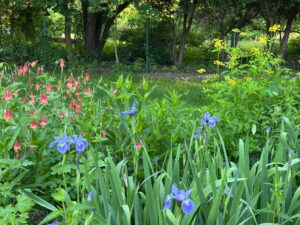
What a fantastic time of year to be in Concord! The days are warm and long, the birds are singing away, leaves are on the trees and pollen is in the air. The natural world is exploding! For many of us, this is why we live here, and the main reason to dedicate ourselves to protecting it.
For homeowners and gardeners, getting through this time can be exhausting with everything happening so fast. Mowing the lawn, planting the garden and keeping ahead of the weeds, getting rid of invasive plants and protecting your family from ticks and mosquitos are a few of the tasks we didn’t have to worry about a few weeks ago. Below we bring you some information and resources which we hope you will find useful, so you can feeling good about doing things the right way – environmentally sustainable, healthy and economical.
Sustainable Landscaping - the Why, What and How
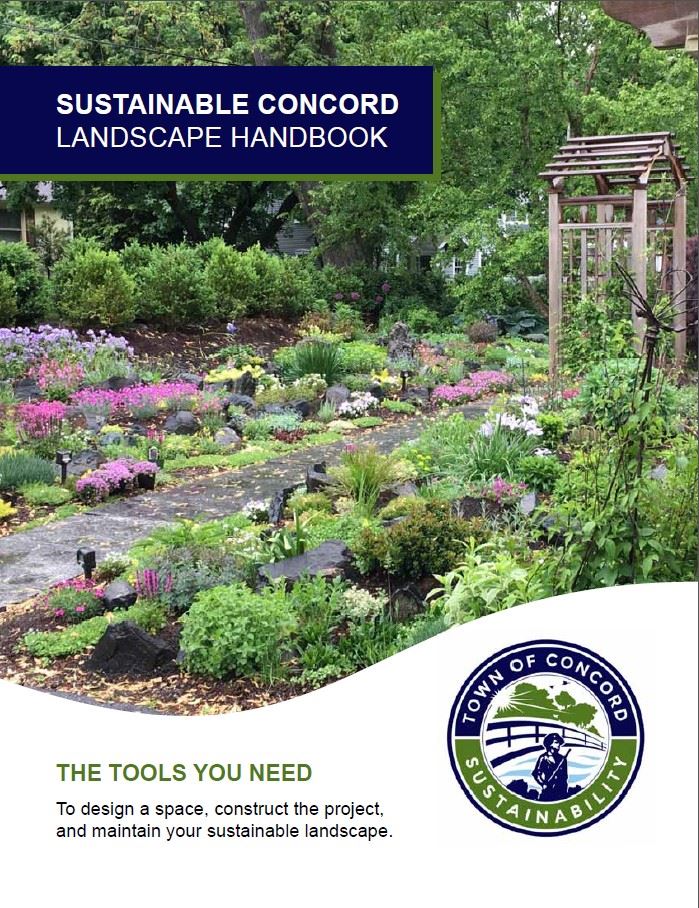
Thankfully, we don’t have to reinvent the wheel, because Concord’s sustainability staff and volunteers have put together some fantastic resources to guide us. Start with this Sustainable Landscaping web page, which has great information on gardening, lawn care, water use, composting and more. There you can find the Sustainable Concord Landscaping Handbook, a 50 page guide to improving and maintaining your grounds in nature-compatible ways. There is a lot of detail in it, and your input towards maintaining the handbook and web resources are greatly appreciated. Email info@coolerconcord.org for questions and suggestions, and we’ll connect you with the local experts.
Before we move onto a couple other topics, here a couple guiding principles we think are worth sharing:
- Landscaping companies don’t necessarily have your health and the environment front of mind, even if they call themselves “green”. Take the time to understand what they are trying to sell you, and decide for yourself what is right.
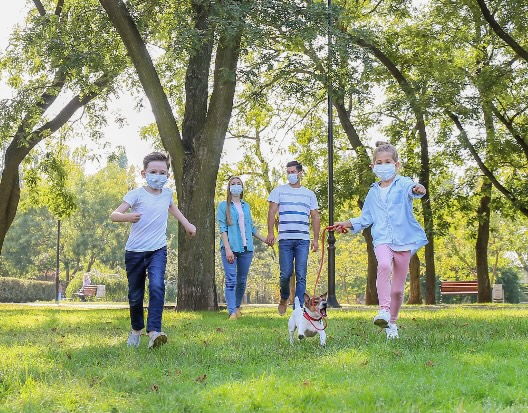
- Instead of the old cliche “don’t let perfection be the enemy of good” we’d say don’t let perfection be the enemy of the bugs, critters and children. You don’t need a perfectly green weedless lawn (a.k.a. “chem lawn”) since nature is beautiful with all its imperfections.
Pesticides vs Pollinators
Beneficial insects are super important members of the environment, for pollination (essential for 75% of crops and 90% of flowers), natural pest control, decomposition, and soil health. Ticks and insect pests on the other hand can spread diseases, ruin crops and kill trees. So it’s understandable we want less of the latter and more of the former.
But here is an astounding and scary fact:40% of insect species (beneficial or otherwise) are in danger of going extinct due to a combination of habitat loss, chemical pesticides, climate change and other factors. Insect populations have decreased dramatically in the last 30 years, which – while not front page news i- s threatening indeed.
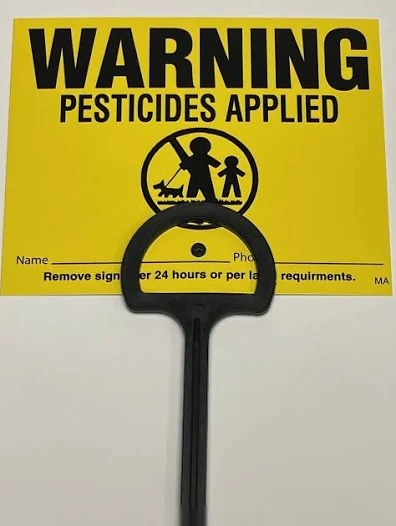
Chemical pesticides are still used at many Concord residences. What are they, and are they safe? Most companies selling mosquito and tick treatments use pesticide sprays, frequently synthetic pyrethyroids, or pyrethrins, which are naturally derived but both are toxic to a wide range of insects. They are not known to be toxic to humans. There are also organic oils including cedar oil, peppermint oil or garlic oil, which are certainly safe for pets and children, though we can’t vouch for the effectiveness.
An alternative for Ticks, which some people swear by is tick tubes, which can be purchased at local hardware stores. Pyrethrin can also be used to spray clothing and is a quite effective tick repellant.
How to help your local pollinators
Concord takes the issues involving pollinators seriously. The Pollinator Health Advisory Committee, established in 2017, is engaged in education and research on pesticides, and advises the town on policy relating to pollinators. Those can be bees (native species and honeybees), butterflies, moths, flies, beetles and hummingbirds. Around the town there are a number of pollinator gardens which you can take a look at, and this is one way you could get involved in this issue.
Another way to help pollinatorsone can raise honeybees, if you have the space, time, money and patience. The Middlesex County Beekeepers Association is an active network of beekeepers which meets monthly in Concord. You can get started with them by helping a beekeeper out to get some experience, or dive in deep and start some hives at home. It isn’t easy, but it a fascinating hobby.
How about those other pests?
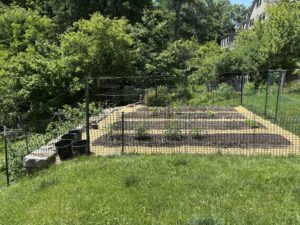
In our garden, the worst pests are deer, who bite off entire plants and seedlings. We’ve built a 6 foot fence which we hope will deter them this year, but i’d be more confident if it was 8 feet. The other issue is squirrels, which eat every bit of fruit we grow. If anyone has a good suggestion on dealing with them, please let me know!
Share via: